I don't know what it is with me and pop music lately, but I seem to be more and more entranced with that perfect radio-friendly song that gets stuck in your head and won't let go. The Wilco album I loved so much from last year was oozing with it. And it's not as though I've had a long-standing hatred of pop music and am just now finally coming around to it - some of my favorite punk bands are extremely pop oriented(i.e., The Misfits, Buzzcocks). Pop is often maligned with soulless, manufactured stars who need to project an image of round-the-clock horniness in order to sell records. Pop, however, is far more universal than that and a good song is a good song.
Lindi Ortega is a Canadian songwriter who has written one of those pop gems that is stuck in my head currently. "Dying of Another Broken Heart" is a 2008 song from her Drifter EP(I know, I'm two years behind). Ortega sounds like a poppier version of Dolly Parton and she will begin recording her first full-length album for her new label Cherrytree Records next month.
Monday, February 22, 2010


Tuesday, February 16, 2010
The Battle of Algiers
Terrorism. Torture. Occupation. The tension between Islam and the West. There is not a more relevant film for this post 9/11 world we live in than director Gillo Pontecorvo's The Battle of Algiers. And, yet, this film was made forty-four years ago in 1966.
The Battle of Algiers documents the Algerian War of Independence against French colonial rule between 1954 and 1960. It depends heavily on non-actors of Algerian descent which director Pontecorvo demanded as a necessity in the "smell of truth" for his film. And it works. Ennio Morricone's score is, at times, so maddening that it provoked anxiety within me. Even though that's not very difficult to do - Morricone's soundtrack for this film works. The bombing scenes are so real that you can't help but wonder if actors were actually hurt in the process.
The film also does a great job of exploring the logic of violence from both the Algerian perspective as well as the French perspective, so much so that the film was criticized for portraying French Colonel Mathieu as too elegant and noble. The Battle of Algiers is an excellent and well-rounded film that is a necessity in understanding the world around us today.
The Battle of Algiers documents the Algerian War of Independence against French colonial rule between 1954 and 1960. It depends heavily on non-actors of Algerian descent which director Pontecorvo demanded as a necessity in the "smell of truth" for his film. And it works. Ennio Morricone's score is, at times, so maddening that it provoked anxiety within me. Even though that's not very difficult to do - Morricone's soundtrack for this film works. The bombing scenes are so real that you can't help but wonder if actors were actually hurt in the process.
The film also does a great job of exploring the logic of violence from both the Algerian perspective as well as the French perspective, so much so that the film was criticized for portraying French Colonel Mathieu as too elegant and noble. The Battle of Algiers is an excellent and well-rounded film that is a necessity in understanding the world around us today.
Monday, February 15, 2010
Marina and the Diamonds
It's not often that you will find me singing the praises of European pop music, but when it's dripping with the cynicism and sarcasm found in Marina and the Diamonds' latest song "Hollywood," it's hard not to pay attention.
There's not a whole lot of information in webland about Marina and the Diamonds but, apparently, it's the solo project of 24-year-old Marina Lambrini Diamandis. Her debut album The Family Jewels will be released on February 22, 2010. This young lady is going to be a star.
There's not a whole lot of information in webland about Marina and the Diamonds but, apparently, it's the solo project of 24-year-old Marina Lambrini Diamandis. Her debut album The Family Jewels will be released on February 22, 2010. This young lady is going to be a star.
Friday, February 12, 2010
Allison Moorer
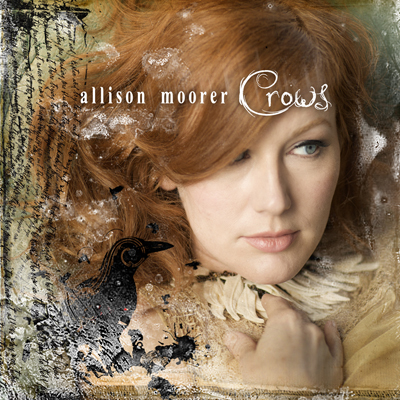
I don't wish emotional suffering on anyone, but when someone can channel that suffering into their music, it's often a beautiful thing no matter how uncomfortable it may make the listener feel. With Allison Moorer's latest album Crows, there's no hidden meanings or layers to unpeel - her sadness is on full display throughout the album's thirteen tracks. And though Moorer is generally regarded as a country singer, Crows doesn't feel like a particularly country album, but it is a beautiful listen none the less.
Saturday, February 6, 2010
Casual Victim Pile

One of the biggest independent record labels around today is Matador Records based out of New York City. I had no idea that Matador's co-owner, Gerard Cosloy, actually lived here in Austin until the news broke last year that his house in Austin had been destroyed by a fire. During his four-year stay here, he's been checking out the local underground music scene and decided to put out a compilation of the bands he thought needed to be heard. The result is Casual Victim Pile and it is, in my opinion, the first great record of this decade. The nineteen bands on this compilation are all playing Beerland this weekend and it has all the makings of being a historic chapter in the Austin music scene.
Tuesday, January 26, 2010
...And The Godfather
One of the most iconic songs in the history of music is Gil Scott-Heron's 1971 classic The Revolution Will Not Be Televised.
Considered by many as "the Godfather of rap," I associate him more with poetry slams than I do with rap music. He's more Saul Williams than he is Lil' Wayne, but that's just me.
And, as 2010 is shaping up to be the year of the comeback, count Gil Scott-Heron as one who is poised to make a big comeback with his first album in thirteen years entitled I'm New Here due out next month on XL Recordings. If the new album is anything like his new song "Me And The Devil," 2010 will be a great year for "the Godfather."
Considered by many as "the Godfather of rap," I associate him more with poetry slams than I do with rap music. He's more Saul Williams than he is Lil' Wayne, but that's just me.
And, as 2010 is shaping up to be the year of the comeback, count Gil Scott-Heron as one who is poised to make a big comeback with his first album in thirteen years entitled I'm New Here due out next month on XL Recordings. If the new album is anything like his new song "Me And The Devil," 2010 will be a great year for "the Godfather."
Saturday, January 23, 2010
Confessions of a Pro-Choicer
As a teenager, the politics of the abortion debate was unformed like a lump of clay in my mind. I was religious at the time, but ideology in any direction wasn't exactly a strong component in my thought processes. During this time, a close friend of mine approached me with tears in her eyes and a revelation that she was pregnant. "My parents are going to kill me," she said. She asked me if I would loan her the money for an abortion which I did without hesitation. She was sincerely terrified and that was all I needed to make my decision.
The transition, for me, from redneck to college graduate was profound. I went from never having read a book to never being able to put one down. I shed my southern baptist skin and became an atheist who challenged everything, or so I thought.
Life, to me, is not exactly the miracle that so many make it out to be. Any two morons can have sex and create a life or lives that contribute more to the decay of this planet than the actual improvement of it. All you have to do is turn on your tv or pick up a newspaper or just walk outside your door to see living proof of it. And though I'm aware and sensitive to the multitude of social ills that plague this planet, I can honestly say that my efforts to alleviate them are minimal at best.
To say that I am pro-choice is an understatement, but a recent article in The New York Times Magazine by Annie Murphy Paul has not only challenged my way of thinking, but it has exposed a deficiency in what I thought was my greatest strength - challenging conventional wisdom and "group-think" mentalities to form my own unbiased opinion. But I never challenged the abortion debate because I've always believed that scientific evidence trumps religious faith any day of the week. When does life begin? Conception? 1 week? 1 month? Actual birth? I don't know and I really don't care because how much consciousness does one possess in the womb of its mother anyway? The article, however, has a twist as it follows a doctor by the name of Kanwaljeet Anand who was a medical resident in a neonatal care unit twenty-five years ago:
"What's going on in there to make these babies so stressed?" Anand wondered. Breaking with hospital practice, he wrangled permission to follow his patients into the O.R. "That's when I discovered that the babies were not getting anesthesia," he recalled recently. Infants undergoing major surgery were receiving only a paralytic to keep them still. Anand's encounter with this practice occurred at John Radcliffe Hospital in Oxford, England, but it was common almost everywhere. Doctors were convinced that newborns' nervous systems were too immature to sense pain, and that the dangers of anesthesia exceeded any potential benefits.*
That last sentence floored me. Does logic not dictate that its better to err on the side of caution when dealing with a life form's capacity to feel pain? Anand would try to understand this issue further by conducting a series of clinical trials in which he found that "operations performed under minimal or no anesthesia produced a 'massive stress response' in newborn babies, releasing a flood of fight-or-flight hormones like adrenaline and cortisol." Anand's curiosity grew and, as the neonatal intensive care unit's technology improved, the ages of the pretern infants he cared for grew younger and he would find that "even the most premature babies grimaced when pricked by a needle."
The anti-abortion movement has, of late, rallied around fetal pain to champion their cause and I find it incredibly difficult, even in my pro-choice mentality, to argue against their case. I assumed that the medical and scientific community would not assume who does and does not feel pain. I was wrong. And in the legal framework of deciding when life begins in the abortion debate - ironically, it just might be science that assists the anti-abortion movement rather than faith.
*"The First Ache," by Annie Murphy Paul. The New York Times Magazine, February 10, 2008
The transition, for me, from redneck to college graduate was profound. I went from never having read a book to never being able to put one down. I shed my southern baptist skin and became an atheist who challenged everything, or so I thought.
Life, to me, is not exactly the miracle that so many make it out to be. Any two morons can have sex and create a life or lives that contribute more to the decay of this planet than the actual improvement of it. All you have to do is turn on your tv or pick up a newspaper or just walk outside your door to see living proof of it. And though I'm aware and sensitive to the multitude of social ills that plague this planet, I can honestly say that my efforts to alleviate them are minimal at best.
To say that I am pro-choice is an understatement, but a recent article in The New York Times Magazine by Annie Murphy Paul has not only challenged my way of thinking, but it has exposed a deficiency in what I thought was my greatest strength - challenging conventional wisdom and "group-think" mentalities to form my own unbiased opinion. But I never challenged the abortion debate because I've always believed that scientific evidence trumps religious faith any day of the week. When does life begin? Conception? 1 week? 1 month? Actual birth? I don't know and I really don't care because how much consciousness does one possess in the womb of its mother anyway? The article, however, has a twist as it follows a doctor by the name of Kanwaljeet Anand who was a medical resident in a neonatal care unit twenty-five years ago:
...his tiny patients, many of them preterm infants, were often wheeled out of the ward and into an operating room. He soon learned what to expect on their return. The babies came back in terrible shape: their skin was gray, their breathing shallow, their pulses weak. Anand spent hours stabilizing their vital signs, increasing their oxygen supply and administering insulin to balance thier blood sugar.
"What's going on in there to make these babies so stressed?" Anand wondered. Breaking with hospital practice, he wrangled permission to follow his patients into the O.R. "That's when I discovered that the babies were not getting anesthesia," he recalled recently. Infants undergoing major surgery were receiving only a paralytic to keep them still. Anand's encounter with this practice occurred at John Radcliffe Hospital in Oxford, England, but it was common almost everywhere. Doctors were convinced that newborns' nervous systems were too immature to sense pain, and that the dangers of anesthesia exceeded any potential benefits.*
That last sentence floored me. Does logic not dictate that its better to err on the side of caution when dealing with a life form's capacity to feel pain? Anand would try to understand this issue further by conducting a series of clinical trials in which he found that "operations performed under minimal or no anesthesia produced a 'massive stress response' in newborn babies, releasing a flood of fight-or-flight hormones like adrenaline and cortisol." Anand's curiosity grew and, as the neonatal intensive care unit's technology improved, the ages of the pretern infants he cared for grew younger and he would find that "even the most premature babies grimaced when pricked by a needle."
The anti-abortion movement has, of late, rallied around fetal pain to champion their cause and I find it incredibly difficult, even in my pro-choice mentality, to argue against their case. I assumed that the medical and scientific community would not assume who does and does not feel pain. I was wrong. And in the legal framework of deciding when life begins in the abortion debate - ironically, it just might be science that assists the anti-abortion movement rather than faith.
*"The First Ache," by Annie Murphy Paul. The New York Times Magazine, February 10, 2008
Subscribe to:
Comments (Atom)

 Posts
Posts

